
Services / Attic Insulation
Attic Insulation
Blown-in fiberglass or cellulose, old insulation removal and air sealing, with a baffle at every soffit vent — the upgrade you feel on the next power bill.
901-760-7599In a Memphis July the sun loads your roof all afternoon, and the attic underneath it can pass 130°F. Whatever insulation is lying on the attic floor is the only thing between that heat and your ceilings. When it is thin, settled or missing in patches, the upstairs never cools off and the air conditioner runs straight through the evening.
Most Mid-South homes built before the 2000s were insulated to a fraction of today's recommendation, and loose-fill settles over the years. Topping it up to the right depth is one of the cheapest efficiency projects on a house — no walls opened, no living space disturbed, usually finished in a day.
We handle the whole job: removing old insulation when it needs to go, air sealing the bare attic floor, a baffle at every soffit vent, and new blown-in fiberglass or cellulose — your choice. We do wall and floor batts as well.
Measured, not guessed
We check the depth across the whole attic floor, not just at the hatch, and tell you what R-value you have now and what it takes to reach the target.
A baffle at every soffit vent
Every soffit vent gets a baffle so the new insulation cannot bury it — the most common way an insulation job quietly damages a roof.
Old insulation removed or treated
Full removal when the old material is ruined. Every job also gets an enzyme disinfectant sprayed across the attic, which treats rodent droppings and urine when removal is not in the budget.
Free with any roof inspection
We already go into the attic to check decking and ventilation, so an insulation reading costs you nothing extra.
What it costs
In the Memphis area, blown-in fiberglass runs about $1.50–$1.75 per square foot for every 6 inches of depth — so adding 6 inches across a 1,500 sq ft attic is roughly $2,250–$2,625. Removing old insulation is about $1.85 per square foot. Cellulose is quoted on request. Your free attic check comes with an exact written quote showing the depth you have now and the R-value you are getting.
Attic Insulation questions
How much insulation should a Memphis attic have?
Memphis is climate zone 3, where ENERGY STAR recommends R-30 to R-60 in the attic. For most existing homes R-38 to R-49 is the sensible target. The depth that takes depends on the material — each bag lists the settled depth per R-value.
How much does attic insulation cost in Memphis?
Blown-in fiberglass runs about $1.50–$1.75 per square foot for every 6 inches of depth, and removing old insulation is about $1.85 per square foot. Adding 6 inches across a 1,500 sq ft attic comes to roughly $2,250–$2,625. Cellulose is quoted on request, and the free attic check gives you an exact written price.
Can you add insulation on top of what I already have?
Usually, yes. If the existing insulation is dry and not badly compressed, new loose fill goes right on top. If it is wet, moldy or full of rodent droppings, removal is the best fix — and if removal is not in the budget, the enzyme disinfectant we spray on every job treats what is there before the new layer goes on.
Do you remove old insulation?
Yes, completely, down to the bare attic floor — about $1.85 per square foot in the Memphis area. It is also the only point where the attic floor can be properly air sealed, so we do that before the new insulation goes in.
What if my attic has old vermiculite insulation?
Grey-brown, pebble-like vermiculite in older homes can contain asbestos. The EPA's advice is to leave it undisturbed and have it tested by a qualified professional before anyone blows new insulation over it or moves it.
How long does it take?
A top-up is usually finished in a few hours. Jobs that start with removing the old insulation take longer, and a large attic with full removal can run more than a day.
Will new insulation help with my upstairs being hot?
It is usually the biggest single fix, especially paired with air sealing. If the upstairs still runs hot afterwards, the next suspects are attic ventilation and the ductwork running through the attic.
Do you insulate walls and floors?
Yes, with rolled batt insulation wherever the framing is open — new construction, additions, remodels, and floors over a crawl space.
Should I do insulation when I replace my roof?
It is a good time to look at it. Insulation goes in from inside the attic, so it does not depend on the roof being off, but ventilation does — and the two need to be planned together so new insulation does not block the vents.
One attic, start to finish
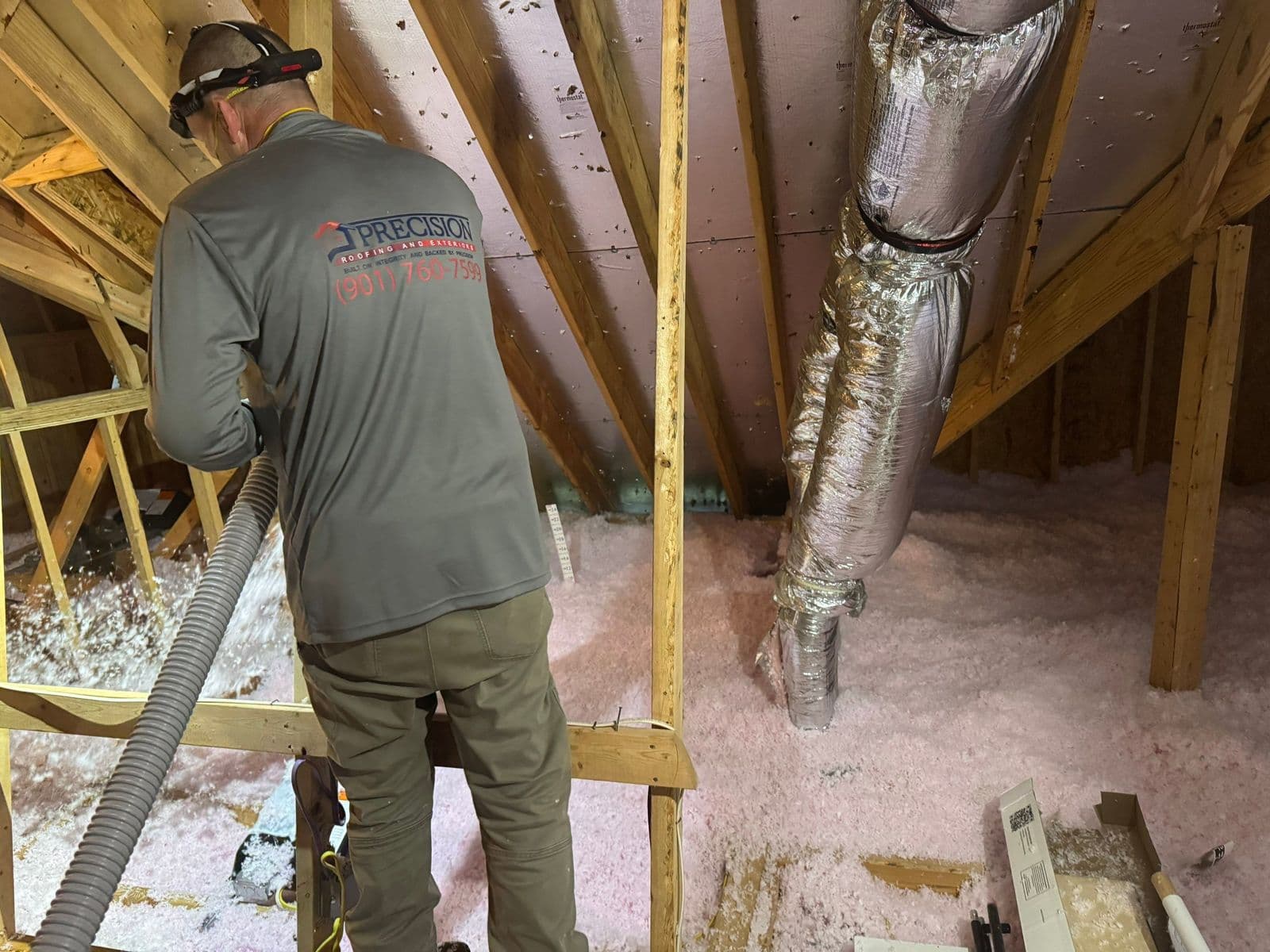
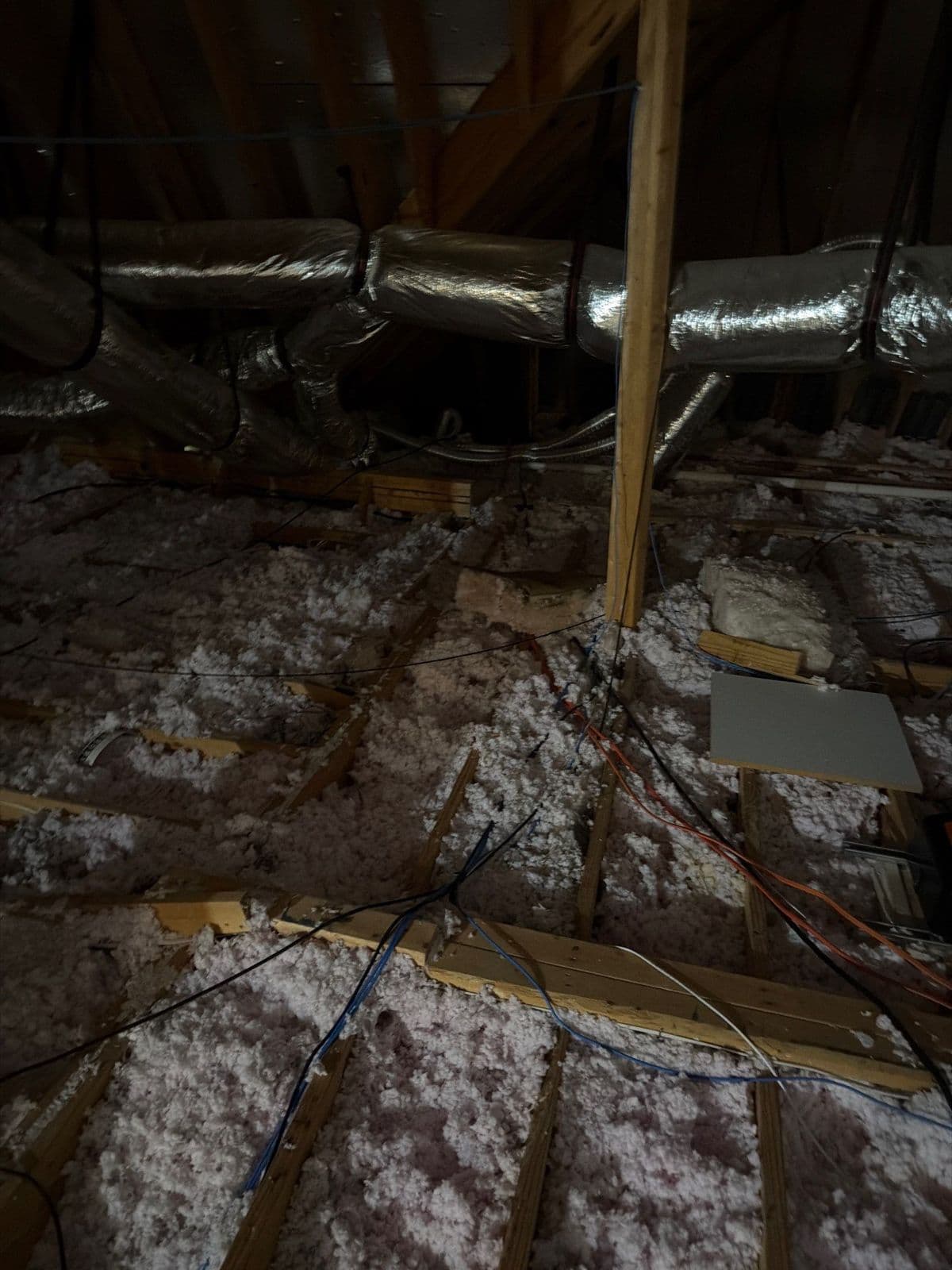
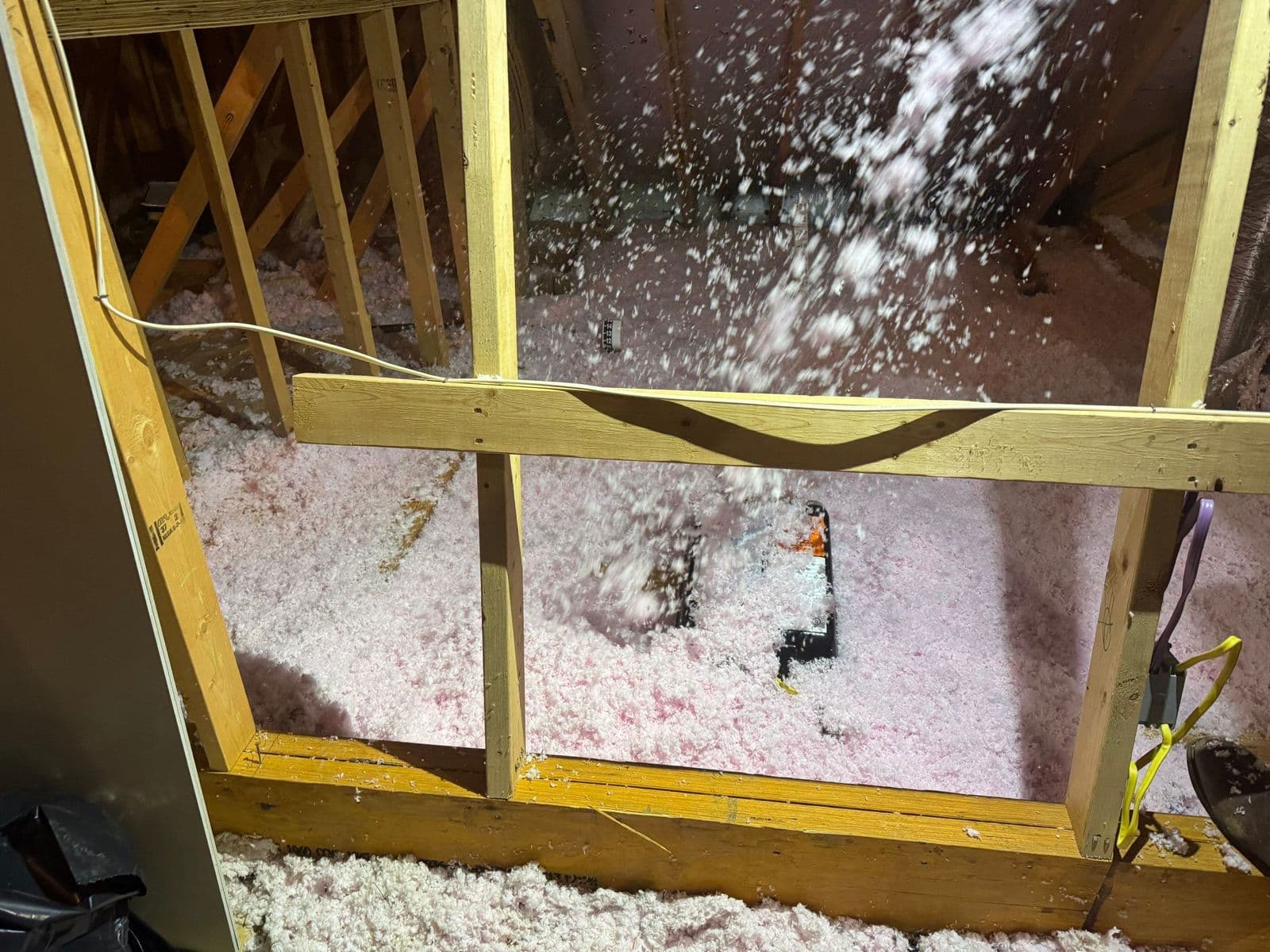
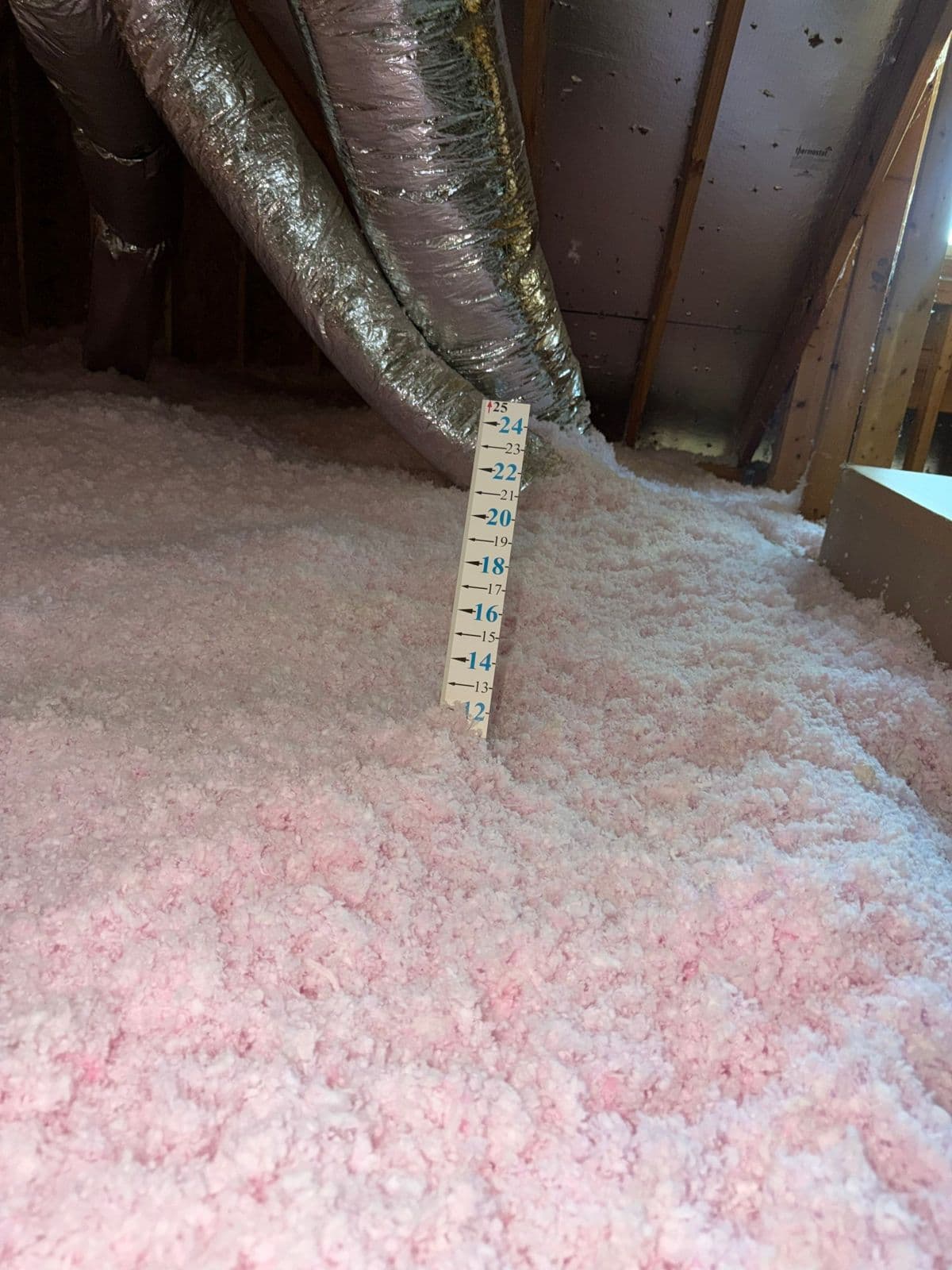
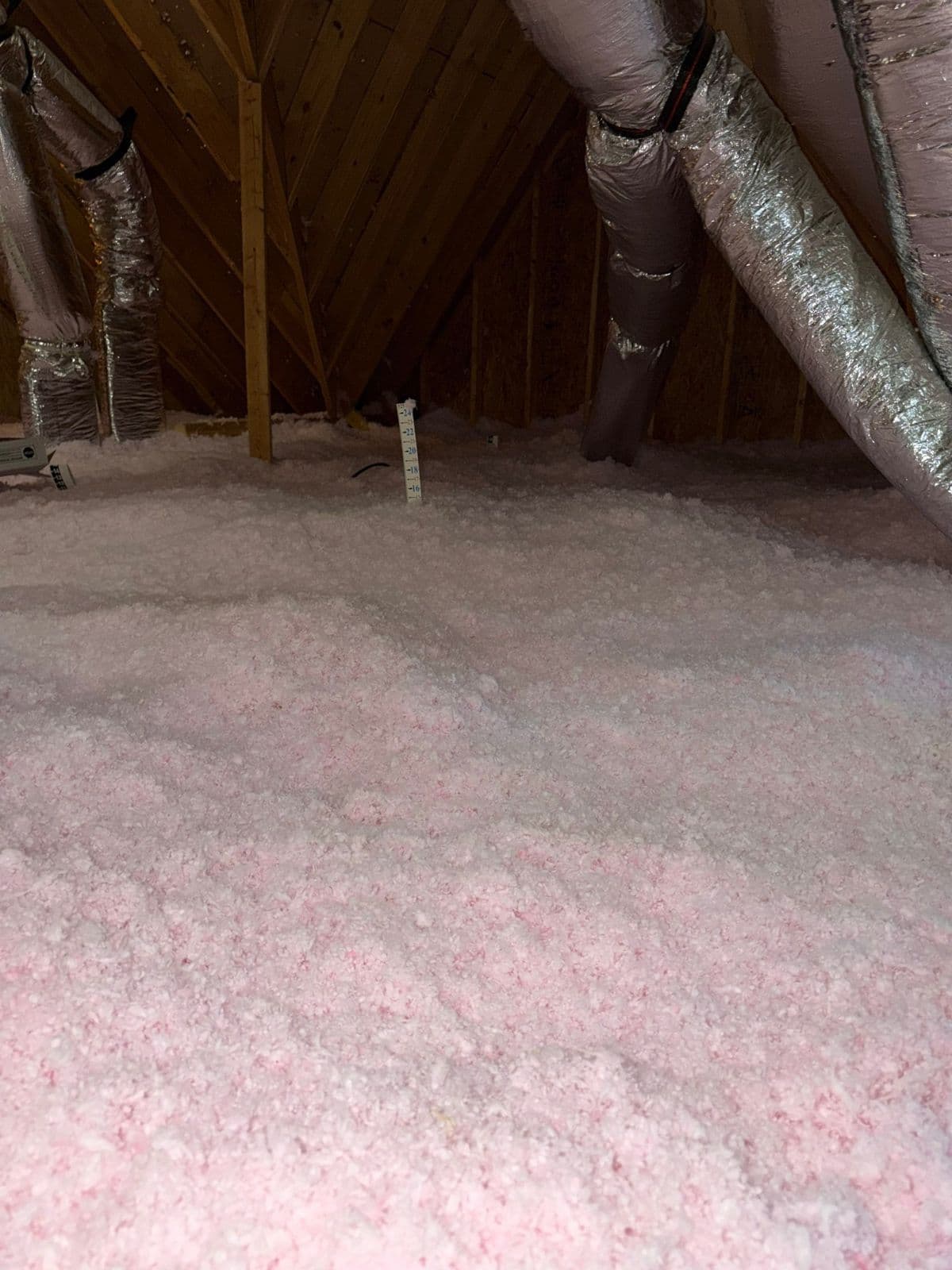
A Memphis-area attic with thin, settled insulation and the joists showing through, brought up to depth with blown fiberglass in a single visit.
How much a Memphis attic needs
Memphis sits in climate zone 3. ENERGY STAR recommends R-30 to R-60 in an attic here, and the current model energy code calls for R-49 in new homes. For an existing house, R-38 to R-49 is the practical target — past that, each extra inch saves less than it costs.
Depth depends on the product, because fiberglass and cellulose insulate differently per inch. Every bag carries a coverage chart showing the settled depth for each R-value, and that is the number we install to.
Plenty of older homes around Memphis are sitting at R-11 to R-19 — three to six inches of material that has settled and been walked through by every cable installer since. Those are the attics where adding insulation pays back fastest.
Fiberglass or cellulose
Both are blown in loose, both get you to the same R-value, and we install either. The difference is what the material is made of and how it behaves over the years.
Blown fiberglass
Our most common install
- Spun glass fibers — it does not absorb water or feed mold.
- Light, so it adds little weight to older ceiling drywall.
- Settles less than cellulose over the years.
- Needs a little more depth than cellulose for the same R-value.
Blown cellulose
Quoted on request
- Recycled paper fiber, treated for fire and pest resistance.
- Denser, so it insulates more per inch and slows air moving through it.
- Settles more, so it is installed deeper to start with.
- Does not want to get wet — a roof leak has to be fixed first.
Signs your attic is under-insulated
You do not need to climb into the attic to have a good guess. These are the symptoms we hear before we find thin insulation.
Inside the house
- Upstairs rooms several degrees warmer than downstairs all summer.
- The air conditioner runs late into the evening after the sun is down.
- Ceilings that feel warm to the touch on a hot afternoon.
- Power bills that keep climbing with no change in how you live.
In the attic
- You can see the tops of the ceiling joists — the insulation is shallower than the framing.
- Bare patches where insulation has been pushed aside or never reached.
- Insulation stained dark at spots, which marks air leaking up from the house.
- Droppings, nesting or a smell — mice have been living in it.
Removal, air sealing and a clean attic
Sometimes the old insulation has to go: soaked by an old roof leak, matted down to nothing, or full of mouse droppings and nesting. We remove it completely, down to the bare attic floor.
That bare floor is the one chance to air seal properly. The gaps around light fixtures, wiring, plumbing stacks and the attic hatch leak conditioned air straight into the attic, and once they are buried under a foot of insulation nobody can reach them. Insulation slows heat; it does not stop air. So on a removal job those gaps get sealed before anything new goes down.
When full removal is not in the budget, there is still a better option than blowing new insulation over a mess. Every insulation job we do gets an enzyme disinfectant sprayed across the attic, which treats the droppings and urine rodents leave behind before the new layer goes on.
Insulation and ventilation are one job
An attic needs air moving through it: drawn in low at the soffits, out high at the ridge or roof vents. That airflow carries off summer heat and winter moisture before either can damage the roof deck.
The common way an insulation job goes wrong is blowing new material straight into the eaves. It buries the soffit vents, the intake stops, and the attic cooks — shortening the life of the shingles above and, with several manufacturers, putting the shingle warranty at risk, because they make proper ventilation a condition of coverage. That is why every soffit vent gets a baffle before we blow anything in.
Because we are roofers, we check both sides of that system on the same visit. If the attic is short on intake or exhaust, we will tell you, and if a roof replacement is coming anyway, that is the cheapest moment to correct the ventilation.
What happens on install day
Before anything goes in, we walk the attic, measure the existing depth, and note anything that changes the job: wet or stained spots that point to a roof leak, damaged ductwork, or old insulation that should not be disturbed.
If the old insulation is coming out, it is removed first and the bare floor is air sealed. Then the prep every job gets: the enzyme disinfectant sprayed across the attic, and a baffle at every soffit vent. Our crew then blows in fiberglass or cellulose through a hose from the truck, to an even depth across the whole floor, and leaves depth rulers standing in it so you can see what you paid for.
A top-up is usually done in a few hours; removal adds time. Either way, downstairs you will barely know we were there.
Walls and floors too
We also install rolled batt insulation in walls and floors. Batts go in where the framing is open — new construction, an addition, a remodel with the drywall off, or the underside of a floor over a crawl space.
Closed, finished walls are a different job; ask, and we will tell you honestly whether it is worth doing on your house.
Ready for a free, honest inspection?
No fee, no pressure, no obligation. Just a straight answer about your roof — with photos to prove it.